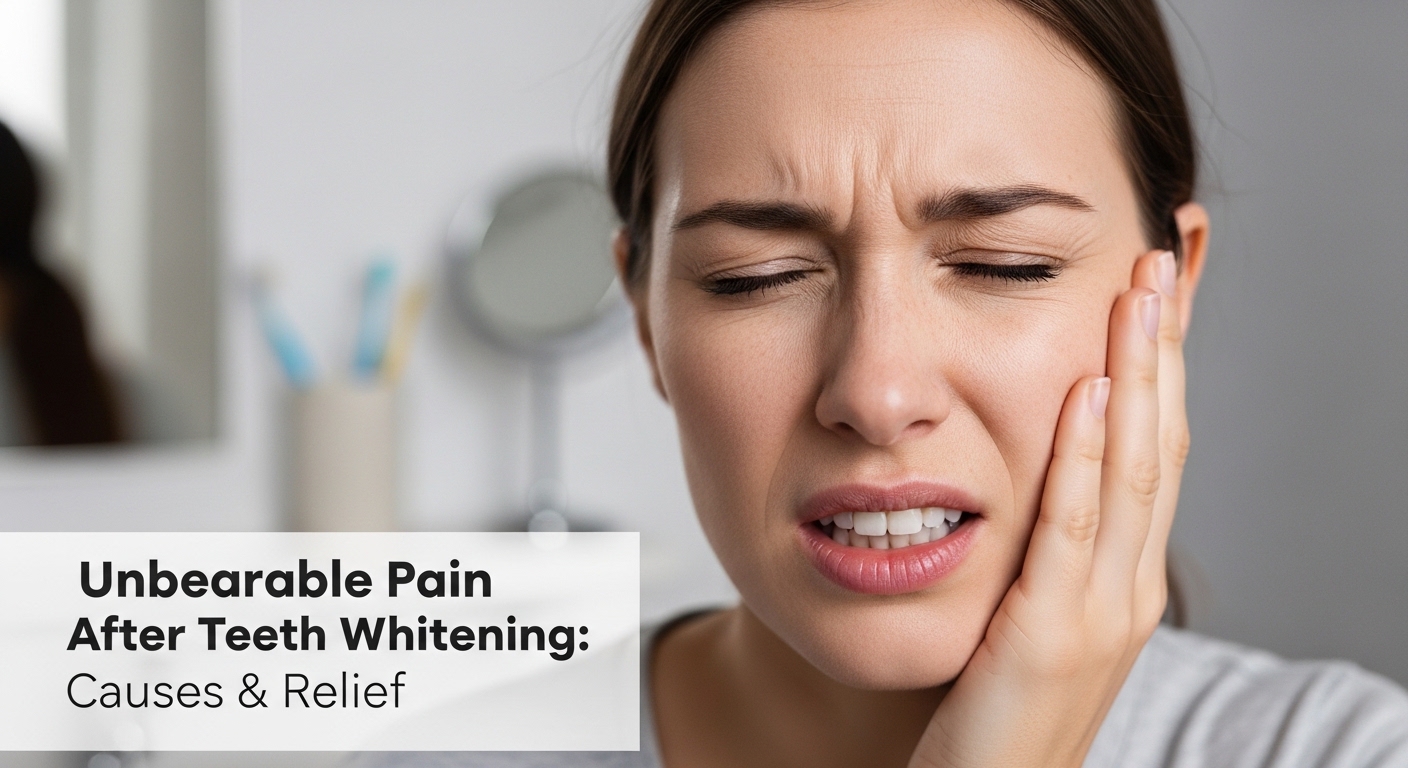
Why Unbearable Pain After Teeth Whitening Happens, How Long It Lasts, and When to See a Dentist
Teeth whitening is one of the most common cosmetic dental treatments, but for some people the experience does not go as planned. Instead of enjoying a brighter smile, they are left dealing with unbearable pain after teeth whitening.
If you are reading this while in pain, you are not alone. Many people search for answers because they are worried that something has gone wrong or that they have permanently damaged their teeth. The reality is that while mild sensitivity is common after whitening, unbearable pain after teeth whitening is not normal and should always be taken seriously.
This guide explains why unbearable pain after teeth whitening happens, how to tell the difference between normal sensitivity and a problem, what you can do to relieve pain safely, how long pain should last, and when seeing a dentist is essential.
Is Unbearable Pain After Teeth Whitening Normal?
A small amount of sensitivity after whitening is expected. This often feels like a brief sharp sensation when drinking cold water or breathing in cold air. For most people, this sensitivity is mild and settles quickly.
Unbearable pain after teeth whitening is different. It may feel deep, throbbing, constant, or intense enough to interfere with sleep or daily activities. Pain of this severity usually indicates that the tooth nerve has become inflamed or that whitening has aggravated an underlying dental issue.
Unbearable pain after teeth whitening is commonly associated with:
- Nerve inflammation
- Exposed dentine
- Cracked teeth
- Tooth decay
- Failing fillings
- Gum irritation or burns
Whitening rarely creates new dental problems, but it can expose problems that were already present but not yet painful.
How Teeth Whitening Works and Why Unbearable Pain After Teeth Whitening Can Occur
To understand why unbearable pain after teeth whitening occurs, it helps to understand how whitening works at a biological level.
Most whitening products use hydrogen peroxide or carbamide peroxide. These chemicals work by penetrating the tooth and breaking down stain molecules that are trapped inside the enamel and dentine.
Although enamel is the hardest substance in the body, it is not completely solid. It contains microscopic pores that allow whitening agents to pass through. Beneath the enamel lies dentine, which contains thousands of fluid filled tubules that connect directly to the tooth nerve.
When whitening gel reaches the dentine:
- Fluid movement inside the tubules increases
- Pressure builds within the tooth
- The nerve becomes more reactive
- Pain signals are amplified
In healthy teeth, this process usually causes mild sensitivity. In vulnerable teeth, it can lead to unbearable pain after teeth whitening.
What Unbearable Pain After Teeth Whitening Feels Like Compared to Normal Sensitivity
Normal whitening sensitivity
Normal sensitivity usually:
- Feels sharp but brief
- Occurs with cold, sweet, or air exposure
- Peaks within the first 24 hours
- Improves steadily each day
- Does not interfere with sleep
Unbearable pain after teeth whitening
Unbearable pain after teeth whitening often:
- Throbs or pulses
- Feels deep or aching
- Wakes you at night
- Is focused in one tooth
- Hurts when biting or chewing
- Radiates to the jaw, ear, or head
- Persists longer than 72 hours
- Gets worse instead of better
If your pain matches the second list, it should not be ignored.
Common Causes of Unbearable Pain After Teeth Whitening
Exposed dentine
Gum recession, enamel erosion, or aggressive brushing can expose dentine. When dentine is exposed, whitening gel reaches the nerve much more quickly, increasing the risk of unbearable pain after teeth whitening.
Microcracks in teeth
Tiny cracks in teeth are common and often invisible. These cracks allow whitening agents to penetrate deeper toward the nerve, triggering sharp or lingering pain.
Undiagnosed tooth decay
Whitening does not cause cavities, but it can irritate a nerve that is already inflamed by decay. This often explains why one tooth hurts much more than the others.
Leaking or failing fillings
Old or damaged fillings may allow whitening gel to seep underneath, irritating the nerve tissue.
Overuse of whitening products
Using whitening products too frequently, wearing trays longer than recommended, or using high strength gels without supervision significantly increases the risk of unbearable pain after teeth whitening.
Gum irritation and chemical burns
If whitening gel touches the gums, it can cause inflammation or chemical burns. Gum pain can feel intense and may be mistaken for tooth pain.
Temporary nerve inflammation
Bleaching causes a short term inflammatory response inside the tooth. Because the nerve is enclosed within hard tooth structure, even minor inflammation can cause severe pain.
How Long Does Unbearable Pain After Teeth Whitening Last?
For most people, whitening sensitivity follows a predictable timeline.
- Mild sensitivity usually lasts 12 to 48 hours
- Moderate discomfort can last up to 72 hours
- Unbearable pain after teeth whitening lasting longer than 3 days is not normal
Pain that worsens, throbs, or spreads is unlikely to resolve on its own and should be assessed by a dentist.
What To Do Immediately If You Have Unbearable Pain After Teeth Whitening
Stop whitening straight away
Continuing whitening when you have unbearable pain after teeth whitening often worsens nerve inflammation.
Avoid triggers
For at least 48 hours, avoid hot drinks, cold drinks, acidic foods, and very sweet foods. Choose lukewarm options instead.
Use a sensitive toothpaste properly
Use a toothpaste designed for sensitive teeth. Brush gently with a soft toothbrush. Spit instead of rinsing so the protective ingredients stay on your teeth. You can also apply a small amount directly to sensitive areas before bed.
Rinse with lukewarm salt water
Salt water rinses can help soothe irritated gums and soft tissues.
Avoid aggressive brushing
Scrubbing teeth can worsen enamel wear and gum recession, increasing sensitivity.
Avoid home remedies
Charcoal, lemon, baking soda, clove oil, and alcohol based mouthwashes can irritate teeth and gums and worsen pain.
What If Painkillers Do Not Work for Unbearable Pain After Teeth Whitening?
Anti inflammatory medications may help mild inflammation, but they will not resolve pain caused by structural or nerve problems.
If painkillers do not relieve unbearable pain after teeth whitening, possible causes include:
- Inflamed tooth nerve
- Cracked tooth
- Deep decay
- Failed filling
- Infection
Pain that overrides medication is a clear signal that dental treatment is required.
When to See a Dentist for Unbearable Pain After Teeth Whitening
You should book a dental appointment promptly if:
- Pain lasts longer than 48 to 72 hours
- Pain is severe or worsening
- Pain wakes you at night
- One tooth hurts much more than others
- Pain occurs when biting or chewing
- Gums are blistered, bleeding, or swollen
- You notice swelling, pus, or a bad taste
- You feel unwell or develop a fever
Early assessment often prevents more invasive treatment later.
What a Dentist Can Do for Unbearable Pain After Teeth Whitening
When you see a dentist for unbearable pain after teeth whitening, the goal is to calm the tooth and identify why it reacted so strongly.
Depending on the cause, treatment may include:
- Fluoride or desensitising applications
- Protective varnishes
- Assessing for cracks or decay
- Replacing or repairing fillings
- Treating gum inflammation
- Managing nerve inflammation
- In some cases, root canal treatment
Addressing the underlying issue usually resolves the pain.
Can Unbearable Pain After Teeth Whitening Be Prevented?
In most cases, yes.
Preventive strategies include:
- Having a dental check before whitening
- Treating decay or cracks first
- Using dentist approved or supervised whitening products
- Choosing lower concentration gels if you are sensitive
- Reducing wear times
- Spacing whitening sessions
- Keeping whitening gel off the gums
- Using a sensitive toothpaste for one to two weeks before whitening
Dentist supervised whitening plans are designed to minimise the risk of unbearable pain after teeth whitening.
Is Professional Whitening Safer If You Have Had Unbearable Pain After Teeth Whitening?
Professional whitening is often safer for people who have previously experienced unbearable pain after teeth whitening.
Dentist supervised whitening allows for:
- Custom fitted trays
- Controlled gel strength
- Desensitising steps before and after whitening
- Adjustments based on sensitivity
- Early detection of problems
This approach reduces the risk of severe pain while still achieving cosmetic results.
Frequently Asked Questions About Unbearable Pain After Teeth Whitening
1. Is unbearable pain after teeth whitening normal?
No. Mild sensitivity is common, but unbearable pain after teeth whitening is not normal.
2. How long does unbearable pain after teeth whitening last?
Most people improve within 24 to 72 hours. Pain lasting longer should be assessed.
3. Why does one tooth hurt more than the others after whitening?
Pain focused in one tooth often indicates decay, a crack, or a failing filling.
4. What causes unbearable pain after teeth whitening?
Common causes include exposed dentine, nerve inflammation, cracks, decay, or overuse of whitening products.
5. What should I do immediately for unbearable pain after teeth whitening?
Stop whitening, avoid triggers, and use a sensitive toothpaste correctly.
6. Can unbearable pain after teeth whitening mean nerve damage?
Permanent damage is rare, but severe pain indicates inflammation that should be treated.
7. Should I continue whitening if I have unbearable pain after teeth whitening?
No. Continuing can worsen nerve irritation.
8. Can whitening cause unbearable pain after teeth whitening even if it never hurt before?
Yes. Teeth change over time and may become more sensitive or develop hidden issues.
9. Is gum pain part of unbearable pain after teeth whitening?
Mild irritation can occur, but burning or blistering is not normal.
10. When is unbearable pain after teeth whitening an emergency?
If pain is severe, worsening, associated with swelling, fever, or sleep disruption, seek care promptly.
A Note for Leederville and Mount Hawthorn Patients
Our dentists at Leederville Dental regularly see patients experiencing unbearable pain after teeth whitening because an underlying issue was already present or the whitening method was not suitable for their sensitivity level. Early assessment usually identifies the cause, relieves pain, and helps patients whiten safely in the future.