How Teeth Whitening Paste Works and What Results You Can Expect
Teeth whitening paste is often marketed as an easy, affordable way to achieve a whiter smile, but many people are unsure whether it truly works or if it is safe to use every day. At Leederville Dental Clinic at Mount Hawthorn, WA, questions about whitening toothpaste are among the most common we hear from patients trying to improve tooth colour without professional treatment. While whitening paste can play a useful role in maintaining oral hygiene and reducing surface stains, it is important to understand its limitations, potential risks, and how it differs from professional whitening options.
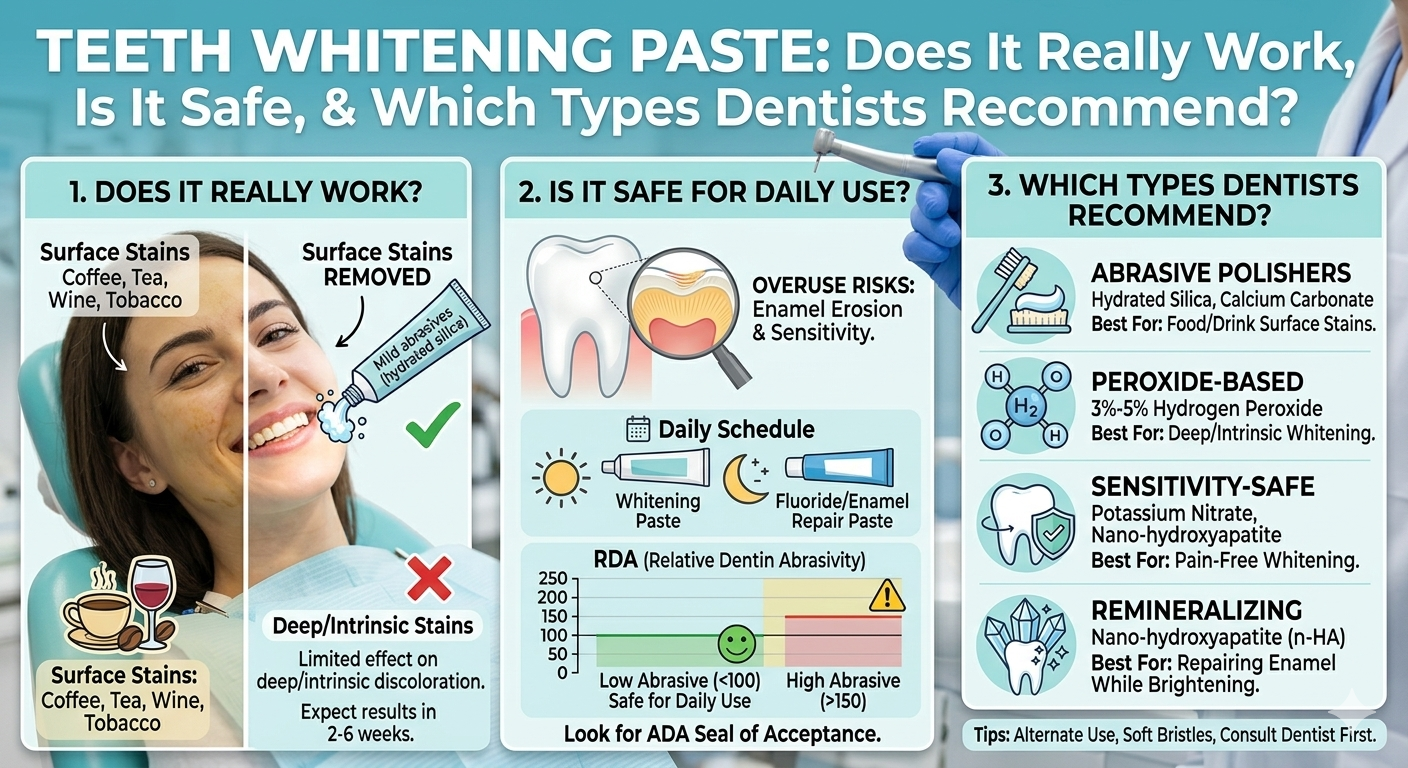
Most teeth whitening pastes work by removing external stains caused by coffee, tea, red wine, smoking, and plaque buildup. They do not usually change the natural shade of teeth or address deeper discolouration within the tooth. This article explains how teeth whitening paste works, whether it actually whitens teeth, how safe it is for daily use, and which types are generally considered dentist recommended based on Australian dental standards.
What Is Teeth Whitening Paste?
Teeth whitening paste is a form of toothpaste designed to improve the appearance of tooth colour by targeting stains on the surface of the enamel. Unlike professional whitening treatments, it does not significantly alter the internal colour of the tooth.
Whitening toothpaste is commonly used as part of daily oral hygiene rather than as a standalone cosmetic treatment. Its primary goal is to keep teeth clean, reduce staining, and maintain brightness over time.
Most products fall into one or more of the following categories:
- Abrasive whitening pastes
- Chemical whitening pastes
- Optical whitening pastes
Each type works differently and offers different benefits and risks depending on the individual.
How Teeth Whitening Paste Works
Whitening toothpaste works through mechanical, chemical, or optical processes. Understanding these mechanisms helps explain why results vary between individuals.
Abrasive stain removal
Most whitening pastes contain mild abrasives such as hydrated silica or calcium carbonate. These ingredients gently polish the enamel surface to remove surface stains.
This process:
- Improves brightness by cleaning the tooth surface
- Does not change the underlying tooth colour
- Depends heavily on brushing technique and frequency
Abrasive whitening is effective for extrinsic stains but can contribute to enamel wear if the paste is too harsh or used incorrectly.
Chemical whitening agents
Some whitening toothpastes contain low concentrations of hydrogen peroxide or similar agents. These chemicals break down stain molecules rather than scrubbing them away.
Hydrogen peroxide toothpaste:
- May penetrate slightly below the surface
- Can improve brightness gradually
- Is far weaker than professional whitening gels
Because of the low concentration, results are subtle and slow compared to in clinic whitening.
Optical brightening agents
Optical whitening pastes use ingredients such as blue covarine. These do not remove stains but instead alter how light reflects off the tooth surface.
This creates:
- An immediate whitening effect
- A temporary cosmetic improvement
- No actual change in tooth colour
Once brushing stops, the effect fades.
Whitening Toothpaste Effectiveness: What Results Are Realistic?
Whitening toothpaste can be effective, but only within specific limits.
What whitening paste can realistically achieve
- Removal of surface stains
- Slight improvement in brightness
- Maintenance of professional whitening results
- Improved cleanliness and plaque control
What whitening paste cannot do
- Dramatically whiten naturally yellow teeth
- Reverse intrinsic discolouration
- Whiten dental restorations
- Replace professional whitening treatments
Most people notice a mild improvement after two to six weeks of consistent use. The maximum improvement is usually around one shade lighter.
Is Teeth Whitening Paste Safe for Daily Use?
Safety depends on the formulation of the toothpaste and the condition of your teeth.
When daily use is generally safe
- The product is labelled enamel safe
- Abrasivity levels are within accepted limits
- Fluoride is included
- Instructions are followed
Most whitening toothpastes sold in Australia meet regulatory standards and are safe for daily use when used correctly.
Potential risks of whitening toothpaste
Even safe products can cause problems if misused.
Common risks include:
- Enamel wear from excessive abrasivity
- Tooth sensitivity
- Gum irritation from aggressive brushing
- Increased wear in patients with enamel erosion
In clinical settings, problems often arise when whitening toothpaste is combined with hard brushing, abrasive toothbrushes, or other whitening products.
What Makes a Whitening Toothpaste Enamel Safe?
An enamel safe whitening paste balances stain removal with protection of tooth structure.
Key characteristics include:
- Low to moderate abrasivity
- Presence of fluoride
- Neutral pH
- Desensitising ingredients
- Clear guidance for daily use
Products that promise instant or dramatic whitening often rely on harsher abrasives and should be approached with caution.
Types of Teeth Whitening Paste Explained
Abrasive whitening toothpaste
These toothpastes rely on physical polishing.
Benefits:
- Effective for surface stains
- No chemical bleaching
- Widely available
Drawbacks :
- Risk of enamel wear with long term use
- Limited whitening depth
Hydrogen peroxide toothpaste
These use low concentration peroxide to chemically break down stains.
Benefits:
- Slightly deeper whitening than abrasives alone
- Gradual improvement
Drawbacks:
- Can increase sensitivity
- Limited effectiveness compared to professional whitening
Optical whitening toothpaste
These rely on colour science rather than stain removal.
Benefits:
- Immediate visible effect
- No abrasion or chemical bleaching
Drawbacks:
- Temporary results
- No long term whitening benefit
Which Teeth Whitening Paste Do Dentists Recommend?
Dentists generally do not recommend a single “best” whitening toothpaste. Recommendations depend on the patient’s enamel strength, sensitivity, and expectations.
Dentist preferred features include:
- Fluoride for enamel protection
- Low abrasivity
- Clinical testing or dental endorsement
- Sensitivity friendly formulations
Highly abrasive or aggressively marketed products are often discouraged for daily use.
Can Yellow Teeth Turn White Again?
Yes, but the cause of yellowing matters.
Yellowing that responds to whitening paste
Food and drink stains
Smoking related discolouration
Plaque buildup
Yellowing that requires professional treatment
Age related enamel thinning
Intrinsic discolouration
Trauma or medication related staining
Whitening toothpaste can help maintain colour but rarely delivers dramatic changes on its own.
Can You Scrape Yellow Off Your Teeth?
No. Scraping teeth at home can damage enamel and gums.
Yellow material may be:
Plaque, which brushing removes
Tartar, which requires professional cleaning
Attempting to scrape teeth can lead to enamel damage, gum recession, and infection.
How Long Does Whitening Toothpaste Take to Work?
Most people experience:
Minor improvement after two to three weeks
Maximum results after four to six weeks
After this point, whitening plateaus and the toothpaste mainly helps prevent new stains.
How to Use Teeth Whitening Paste Safely
Brush twice daily with a soft toothbrush
Use gentle pressure
Avoid combining multiple whitening products
Stop use if sensitivity develops
Technique is just as important as product choice.
Whitening Toothpaste vs Professional Teeth Whitening

Whitening toothpaste
Subtle improvement
Gradual results
Lower cost
Maintenance focused
Professional whitening
Noticeable shade change
Faster results
Customised treatment
Dentist supervision
Many patients use whitening toothpaste to maintain professional whitening outcomes rather than replace them.
Why Professional Teeth Whitening at a Dental Clinic Often Produces Better Results
While whitening toothpaste and over-the-counter whitening kits can help reduce surface stains, professional whitening performed by a dentist often provides more noticeable and predictable results.
Stronger and more effective whitening agents
Dental clinics use professional-grade whitening gels that contain higher concentrations of active ingredients such as hydrogen peroxide or carbamide peroxide. These agents penetrate deeper into the tooth enamel to break down internal stain molecules.
Because of this, professional treatments can:
Whiten teeth by several shades
Address deeper discolouration
Deliver faster visible results
Over-the-counter kits and whitening toothpaste typically contain lower concentrations, which limits their whitening power.
Customised treatment for your teeth
Dentists assess the cause of tooth discolouration before recommending whitening treatment. This helps determine whether stains are caused by food, ageing, medications, or other dental conditions.
A personalised approach allows dentists to:
Select the most appropriate whitening method
Adjust treatment strength based on sensitivity
Ensure safe and effective results
Protection for enamel and gums
Professional whitening treatments are carefully controlled to protect surrounding tissues. Dentists use barriers and protective techniques to minimise irritation to the gums and soft tissues.
This supervision helps reduce risks such as:
Gum burns from strong whitening gels
Uneven whitening
Excessive tooth sensitivity
Even whitening results
Over-the-counter whitening products can sometimes produce uneven results because trays or strips may not fit properly.
Professional whitening ensures:
Even application of whitening gel
Coverage of all visible teeth
Consistent colour improvement across the smile
Long-term whitening management
Dentists can also help patients maintain whitening results through professional cleaning, personalised oral hygiene advice, and safe maintenance products.
This approach often produces longer-lasting results compared with relying only on whitening toothpaste or kits.
Who Should Avoid Whitening Toothpaste?
Whitening paste may not be suitable for people with:
Significant sensitivity
Enamel erosion
Gum recession
Extensive restorations
Children should only use whitening products under dental guidance.
Australian Dental Standards and Whitening Products
In Western Australia, dentists follow Australian Dental Association guidelines when advising patients on whitening products, enamel safety, and long term oral health outcomes. While whitening toothpastes sold locally meet safety standards, individual suitability varies based on oral health history.
Quick Answers: Teeth Whitening Paste
- Removes surface stains only
- Results are subtle
- Safe when enamel friendly
- Overuse can cause sensitivity
- Best for maintenance
Need Professional Advice About Teeth Whitening?
If whitening toothpaste is not giving the results you expect, the cause of tooth discolouration may be deeper than surface stains. A professional dental assessment can help determine whether a stain removal clean, dentist-supervised whitening, or another treatment would be more effective.
At Leederville Dental Clinic at Mount Hawthorn, our dentists help patients understand the safest and most effective ways to improve tooth colour while protecting enamel health. Whether you want advice on whitening toothpaste or are considering professional teeth whitening, our team can recommend options tailored to your teeth and sensitivity levels.
Book a consultation with our Leederville dental team today to discuss safe teeth whitening options and achieve a brighter, healthier smile, or call our Mount Hawthorn clinic at +61 8 9201 2744 to schedule your visit.
Visit Our Mount Hawthorn Dental Clinic Near Leederville
Leederville Dental Clinic is conveniently located in Mount Hawthorn, making it easy for patients from nearby suburbs such as
Leederville, North Perth, Osborne Park, Wembley, and Subiaco to access professional dental care.
Visit us at our clinic or call our friendly team at
+61 8 9201 2744 to book your appointment today.
Frequently Asked Questions
What is the best toothpaste to whiten teeth?
An enamel safe toothpaste with fluoride and low abrasivity is best.
Which paste is better for teeth whitening?
Gentle whitening pastes designed for daily use are preferable to aggressive formulas.
Does teeth whitening toothpaste actually work?
Yes, but only for surface stains.
Can yellow teeth turn white again?
Surface stains can improve, but intrinsic discolouration usually requires professional treatment.
Can I scrape yellow off my teeth?
No. This can damage enamel and gums.
Is teeth whitening paste safe for everyday use?
Most enamel safe products are safe when used correctly.
Does hydrogen peroxide toothpaste damage enamel?
Low concentrations are generally safe but may cause sensitivity.
How long should I use whitening toothpaste?
It can be used long term if sensitivity does not develop.
Will whitening toothpaste whiten crowns or fillings?
No. Restorations do not change colour.
Should I speak to a dentist before using whitening toothpaste?
Yes, especially if you have sensitivity or existing dental issues.